
Connecting molecular science, metabolism and laboratory interpretation to whole-person health.
Department of Biochemistry
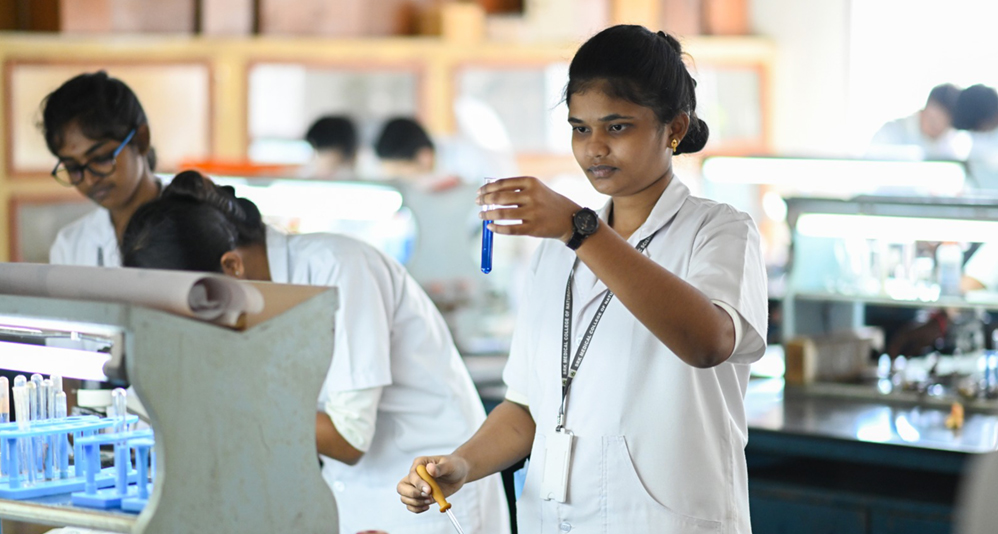
The Department of Biochemistry builds the molecular foundation required to understand nutrition, metabolism, physiology and disease. It deals with acids, bases, buffers and biological chemistry, then progresses through carbohydrates, lipids, proteins, amino acids, nucleic acids, enzymes, vitamins, minerals and cellular organisation. Students study digestion, absorption and the major metabolic pathways, including carbohydrate, lipid, amino-acid, purine and pyrimidine metabolism, together with biochemical genetics, protein synthesis and the biochemical functions of blood, liver and kidney. The department relates these mechanisms to clinically relevant themes such as acid-base balance, jaundice, abnormal haemoglobin, metabolic disorders, detoxification and the biochemical effects of diet, fasting and physical activity. Practical teaching introduces qualitative reactions, routine biochemical estimations and the principles of laboratory instruments so that students learn to interpret results carefully and within their limitations.
Students Learning Outcomes
✔ Grasp the main groups of medically important microorganisms
✔ Apply principles of infection prevention, sterilisation and biosafety
✔ Understand the purpose and interpretation of common microbiological tests
✔ Recognise infection-related red flags and the need for appropriate medical care
Staffs

Dr. Shiny Mol V
BNYS
Associate Professor